

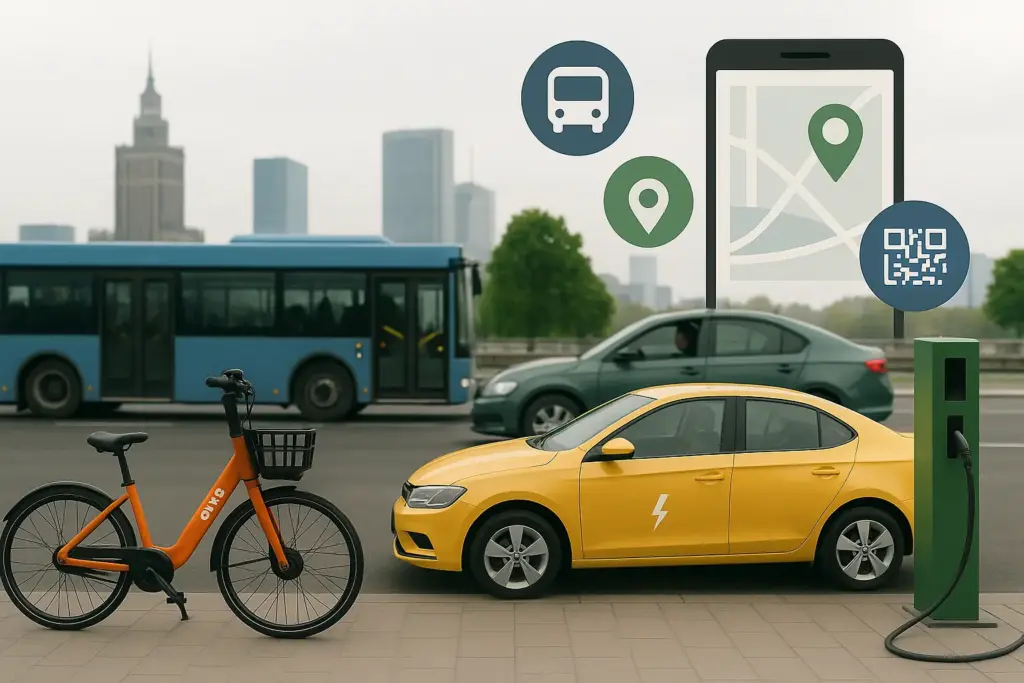
From e-bikes to metro cards, from ride-sharing apps to EV chargers — mobility is more than movement. It’s a living ecosystem reshaping how you and your city connect.
Why “mobility” matters to you
“Mobility” sounds like a buzzword — until you notice it’s everywhere: in city plans, startup decks, even government budgets. But underneath the jargon, it’s simply about how people and goods move efficiently and sustainably.
For a citizen, it means not having to think twice about transport. Whether you tap your metro card, rent an e-bike, or summon an EV via app, the goal is seamless motion: from point A to B without friction, tickets, or waiting lines.
The three layers of modern mobility
1. Physical movement.
This includes every way you travel — public transit, private cars, scooters, shared vans, cargo bikes. Governments focus here because it shapes congestion, emissions, and access to jobs or education.
2. Digital access.
Behind every bus ride or scooter unlock is a data layer: maps, APIs, QR codes, and payment systems. Open APIs and mobility-as-a-service (MaaS) platforms let you plan, pay, and ride across operators in one app.
3. Financial rails.
You might not notice, but mobility and fintech now overlap deeply. Wallets and cards handle not just fares but also micro-transactions — from ₹10 for a metro tap to $5 for parking. Companies like Paytm, PhonePe, and Apple Pay turned “moving around” into a digital commerce moment.
The invisible fintech inside your commute
Every time you scan a QR at a station or unlock an e-bike, you trigger a complex chain:
- a digital ID check (is this your account?),
- a payment authorization (wallet or card),
- a transaction routing through a fintech backend,
- and a data record to track emissions, usage, or subsidies.
This makes mobility both a consumer service and a financial network. Cities now treat it as infrastructure — the same way they do water or electricity.
Why it’s suddenly everywhere
Three forces pushed “mobility” into every conversation:
- Urban crowding. Post-pandemic cities want fewer cars, more space, and cleaner air.
- Digital wallets. Once payment barriers dropped, small daily transactions became frictionless.
- Sustainability pressure. Governments link mobility to climate goals, funding EV chargers, clean buses, and shared rides.
What used to be “transport policy” is now a hybrid of fintech, energy, and data policy.
From ownership to access: a cultural shift
Your parents might have dreamed of owning a car. Today, people want access on demand: a car when it rains, a scooter for the last mile, a bus when it’s cheaper. Subscription passes and contactless payments make this possible.
That’s why “mobility” has become shorthand for freedom — not in the philosophical sense, but in how you move through a city without being locked into one mode or one brand.
Where it’s headed next
Expect your mobility app to evolve into a personal travel wallet: it will show your carbon footprint, suggest cheaper routes, and let you offset emissions with one tap.
For cities, the next frontier is interoperability — getting different operators to talk to each other through open standards and real-time payments.
Facts are based on company statements, city transport data, and industry reporting; accuracy checked as of 16 Oct 2025.